Campbell, CA · Garage Door Service
When a Spring Goes in Cold Weather in Campbell
Why garage door springs in Campbell, CA fail on cold mornings, how 1960s-era housing stock plays a part, and when a repair call makes more sense than waiting.
- Repairs & new doors
- Springs & openers
- Serving 8 nearby communities
What Changes With the Season
Campbell doesn't get hard freezes, but the mild temperate band here still swings 30-40 degrees between a January night and midday. That swing matters more than most owners think. Steel contracts when it's cold and expands again as the sun hits the garage. A torsion spring that's been winding and unwinding under that daily stretch for decades is working harder than it did when it was new.
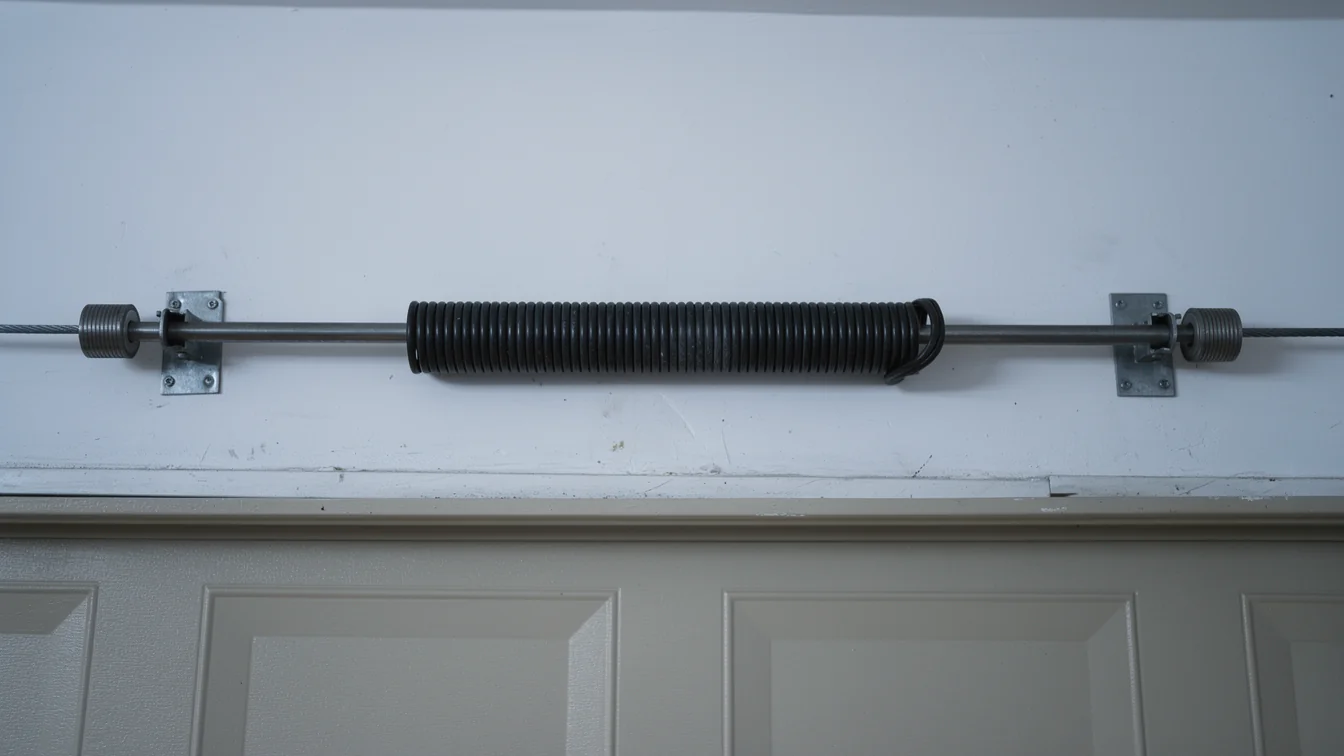
Most of the housing stock in this service area went up between 1947 and 1985, with the bulk clustered in the 1960s and 70s. That means a lot of garages around San Tomas, Cambrian, and Willow Glen still have original or close-to-original spring setups - galvanized torsion springs rated for a different era of daily cycling. Cold mornings are when the metal fatigue these springs have built up over 50-plus years finally shows itself. It's not usually the cold itself that snaps a spring. It's the cold exposing wear that was already there.
If your door feels heavier in the morning than it does by afternoon, that's the contraction talking, not your imagination.
How Local Conditions Play In
Mild climate doesn't mean no stress on the hardware - it means a different kind of stress than a place that sees real winters. There's no ice to worry about, no snow load, but there's a near-daily temperature cycle that a lot of garage doors around here have been absorbing since the Johnson administration. Add in coastal moisture drifting up from the valley on cooler nights, and the galvanized coating on an original spring from the 1960s or 70s has had a long time to thin out.
Houses built in that 1947-1985 window, which covers most of the stock in neighborhoods from West San Jose out toward Cambrian, tend to have single torsion springs sized for lighter doors than what's often installed today. If a heavier insulated door went in at some point without the spring being resized, that spring has been overworking year-round - and cold mornings are just when it finally lets go.
This isn't a story about extreme weather. It's a story about old steel doing the same job for a long time in a climate that never gives it a real break to recover.
When to Get Help
If a spring breaks, the door won't lift, or it will lift about six inches before the opener stalls and starts grinding. Don't try to force it and don't disconnect the opener and hand-lift a door with a broken torsion spring - the other spring, if there is one, is still under load and that's how people get hurt.
Call when you hear a loud bang from the garage (that's usually the spring letting go), when the door is noticeably heavier than it was a week ago, or when you see a visible gap or separation in the coil. Those are signs of a spring near the end, not necessarily broken yet, and catching it before full failure is cheaper and safer.
With median household income in this service area around $188,558 and roughly 61,220 owner-occupied houses here, a lot of homeowners are deciding between a spring repair and a full door replacement when other things on the door - rollers, hinges, the track - are also original to a 1960s build. We'll tell you honestly which side of that line your door is on.
The Problem
The honest limitation here: we can't always tell you a spring is about to fail before it does. Fatigue in galvanized steel doesn't always show visible warning signs, and a spring that looks fine on Tuesday can go on Wednesday morning. What we can do is look at the age and type of spring, check the coating and coil spacing, and give you a straight read on whether it's a candidate for replacement now versus waiting for it to break.
On the roughly 110,656 households across this area, a large share still have the original torsion hardware sized to the building codes and door weights common when these houses went up between 1947 and 1985. That hardware wasn't built to last forever - it was built to last the life of a door that, in a lot of cases, has already been replaced once with something heavier. If nobody resized the spring when the door changed, the mismatch is the real problem, and cold mornings just make it obvious.
Frequently asked questions
Why does my garage door spring break on a cold morning in Campbell?
It's usually not the cold on its own. Steel contracts overnight and expands again by afternoon, and a spring that's already fatigued from decades of that daily cycle tends to fail at the stress point - often first thing in the morning when the door is coldest and heaviest to lift.
Is my house old enough to have an original spring?
If your house was built between 1947 and 1985, which covers most of this area's housing stock, there's a real chance the torsion spring is original or close to it. A spring from the 1960s or 70s has had a long run of daily temperature cycling with no real off-season.
Should I replace both springs if one breaks?
If the other spring is the same age, yes, usually. It's been under the same load and the same daily cycling. Replacing one and leaving a 1960s-era spring on the other side just moves the next failure down the road a few months.
Can I lift the door myself after a spring breaks?
No. If it's a two-spring system, the other spring is still under full tension and the door can drop or the spring can let go while you're working near it. Leave the door down and call for the torsion setup to be replaced as a pair.
Related garage door services in Campbell
More garage door guides
Book garage door service in Campbell
Call now or request a quote - tell us what the door is doing and where you are.