
Campbell, CA · Garage Door Service
Openers, Power Outages, and Campbell's Older Garage Doors
Most Campbell houses date to the 1960s and 70s, and their garage door openers show their age. Here's what power outages and mild seasons mean for your door.
- Repairs & new doors
- Springs & openers
- Serving 8 nearby communities
What Changes With the Season
Campbell sits in a mild temperate band, so you don't get the hard freezes that crack plastic housings or the heavy humidity swings that warp wood panels. That's the good news. The bad news is that a mild climate doesn't mean no change at all, and openers still react to it.
Summer heat inside a closed garage can push logic board temperatures up enough to make an aging opener trip its thermal cutoff and stop mid-cycle, then work fine an hour later once it cools. Owners usually read this as the opener "being weird" rather than a heat issue, because the swing here is gentler than places with real extremes. Winter is milder too, but overnight damp still gets into chain-drive housings that have run uncovered for decades and leaves rollers and gears a step stiffer by morning.
None of this is dramatic. It's the kind of slow seasonal wear that shows up as a slightly louder cycle in January and a slightly slower one on a hot August afternoon, not sudden failure. On a unit that's already decades old, though, mild seasonal stress on top of age is often what finally pushes a marginal opener into a dead one.
How Local Conditions Play In
Housing in and around Campbell mostly went up between 1947 and 1985, with the bulk landing in the 1960s and 70s. Across the roughly 61,220 owner-occupied houses in the service area, that means a lot of garages still have the opener that came with the house, or the one that replaced it in the 80s or 90s.
That matters for power outages specifically. Battery backup on garage door openers didn't become standard equipment until well after most of this housing stock was built, so a chain-drive unit from that era has no fallback when the power drops. The door sits wherever it was when the outage hit, full stop, until someone pulls the manual release.
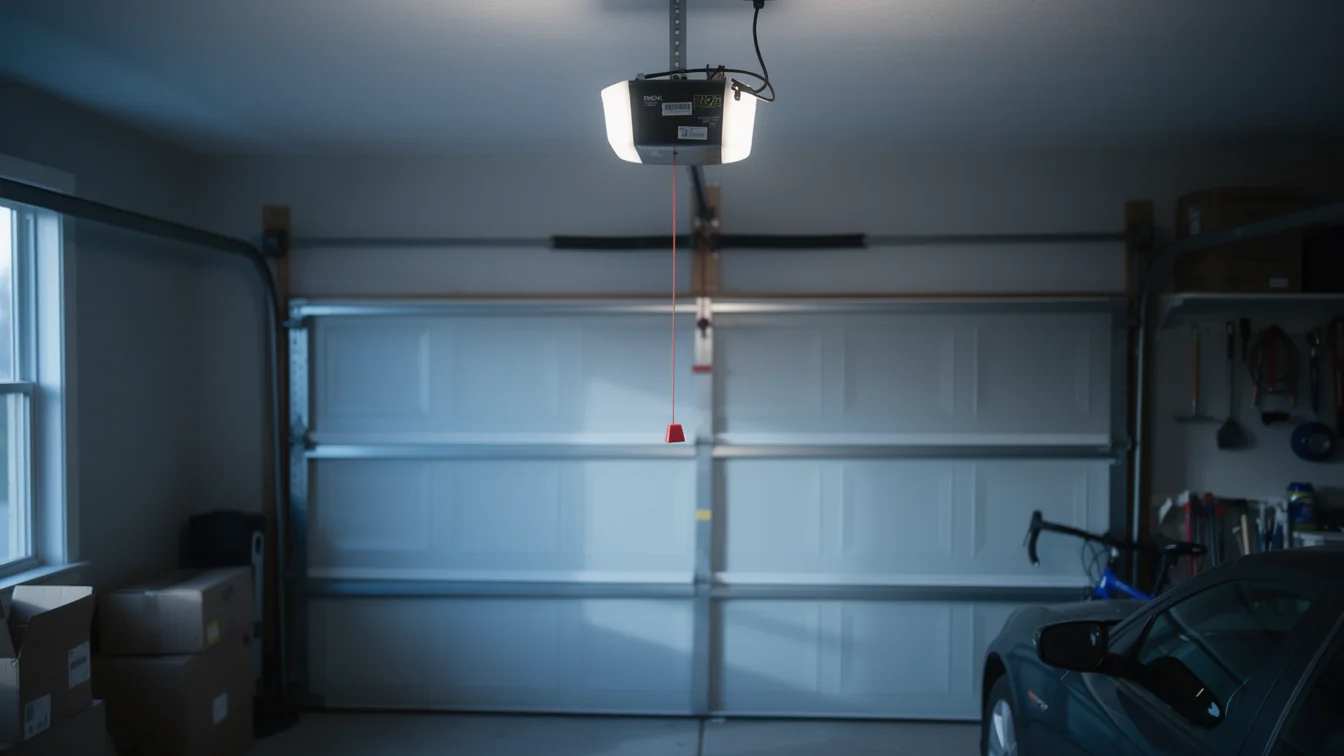
The manual release itself is often the weak point on these older units. After thirty or forty years, the release cord can be brittle, the trolley can be rusted into the track, or a prior owner can have zip-tied it out of the way for some forgotten reason. We see this pattern from San Tomas, a mile southwest, out to Redwood Estates, nine miles up into the hills, because the housing age is consistent across that whole stretch, not just one neighborhood.
With median household income in the area at $188,558, most owners here can afford to replace an opener outright rather than keep patching one that's outlived its design life.
When to Get Help
Call before a power outage catches you off guard, not during one. If your opener hums or clicks but the door doesn't move, if the wall button works but the remote doesn't (or the reverse), or if you have to yank the manual release cord more than once to get it to disengage, that's a unit telling you it's near the end.
Given how much of the local stock traces back to the 1960s and 70s, we check three things on any older opener: whether the battery backup even exists, whether the manual release moves freely, and whether the gear set is original or already replaced once. A unit with no backup and a stiff release is the one that leaves you stuck in a dark garage at the worst time.
If the opener is original to a house from that era, replacement usually makes more sense than repair. Parts for 1960s and 70s chain-drive units are mostly gone from supplier shelves, so a repair often means a used part of unknown age going into an already old machine. We'll tell you straight when that's the case instead of billing for a fix that won't hold.
The Problem
Here's the actual failure mode worth understanding. An opener built or installed during the 1947-1985 boom that shaped most of this area's housing almost never has battery backup, because that feature wasn't standard yet. When the power goes out, the door freezes in position, and the only way to move it is the manual release.
On a newer opener, that's a thirty-second fix. On a decades-old chain-drive unit, the release hardware has often never been used, which means it's seized, painted over, or missing its pull cord entirely. People find this out during the outage, not before, which is the worst possible time to discover it.
We'll say plainly where our limits are: we don't carry every obsolete chain-drive part, and on some units built before battery backup existed, the honest answer is that a repair buys a year or two at best. For a house in this area with that original or near-original opener, replacing it with a unit that has backup power built in solves the power-cut problem permanently instead of just patching the symptom.
Frequently asked questions
Why does my garage door opener stop working the moment the power goes out?
Most openers installed before battery backup became standard have no power source besides the wall outlet. Given that most housing in this area dates to the 1947-1985 boom, a lot of these units predate backup batteries entirely, so an outage leaves the door exactly where it was until you use the manual release.
Is it normal for my opener to act strange on hot days but fine the rest of the time?
Yes, especially on an older unit. Campbell's mild temperate climate doesn't produce extreme heat, but a closed garage can still get warm enough to trip a thermal cutoff on an aging logic board, which then resets once things cool down.
Should I repair or replace an opener that's original to my house?
If your house dates to the 1960s or 70s stock common across this area, the opener is likely past its design life and parts for it are scarce. Replacement with a unit that includes battery backup usually costs less over time than repeated small repairs.
Where is the manual release and why won't it move?
It's the cord hanging from the trolley on the track. On units that have never been used, the release mechanism can seize or get painted over after decades, which is common on original openers from this area's older housing stock.
Related garage door services in Campbell
More garage door guides
Book garage door service in Campbell
Call now or request a quote - tell us what the door is doing and where you are.